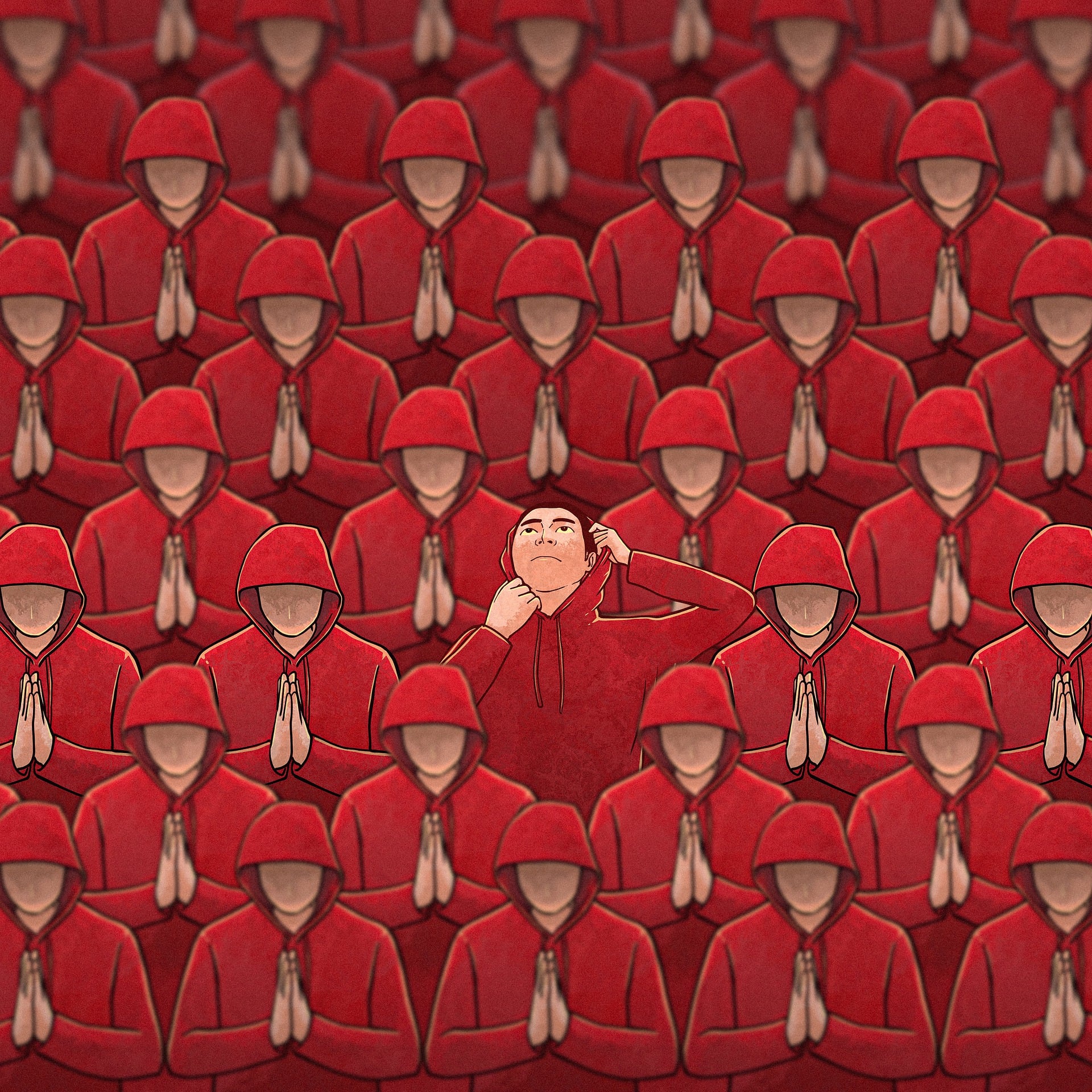
Reflections on 1 Samuel 15
Nicolaus Copernicus, born in 1473, sparked what became known as the Copernican Revolution. For centuries, people believed that the earth was at the center of the universe and that the sun, moon, and stars revolved around it. Copernicus challenged that worldview by showing that the sun, not the earth, was at the center.
It was called a revolution because it completely overturned and eventually replaced the accepted way of thinking.
Becoming a Christian involves a revolution too.
God calls us to repentance and faith in Christ. We become new creations. Our old worldview is challenged, changed, and replaced. We discover a reality that is both humbling and liberating:
I am not at the center of the universe.
Life is not ultimately about my plans, ambitions, dreams, career, or desires. God is at the center. The Christian life begins when we recognize that reality and submit to it.
One of the clearest evidences of this revolution is a growing desire to obey God’s Word.
Obedience does not make us Christians. We are saved by grace through faith in Christ alone. But obedience is evidence that we belong to Christ.
So the question is simple:
- Have you experienced this revolution?
- Is your life characterized by obedience to God’s Word?
- Or are you still trying to live with yourself at the center?
King Saul, Israel’s first king, tried to keep Saul at the center. It did not end well.
The Seriousness of Disobedience
When 1 Samuel 15 opens, Samuel reminds Saul of both his privilege and his responsibility:
“The Lord sent me to anoint you king over his people Israel; now therefore listen to the words of the Lord” (1 Samuel 15:1).
Saul may be king, but he is still subject to a greater King.
His responsibility is simple: listen to and obey God’s Word.
God commands Saul to bring judgment on the Amalekites because of their longstanding opposition to God’s people. Centuries earlier, after Israel came out of Egypt, the Amalekites attacked and murdered the weak and vulnerable among them. God had promised that He would not forget.
And He didn’t.
God says, “I have noted what Amalek did to Israel” (v2).
That should both comfort and sober us.
God notices everything. He remembers. He sees every act of injustice, every attack on His people, every act of rebellion against Him. Nothing escapes His attention.
The judgment commanded here is severe because God is holy and just. He must judge sin. The destruction of Amalek serves as a small-scale picture of the final judgment that will come upon all who persist in rebellion against God.
The God of the Old Testament has not changed. He is still holy. He is still just. He still judges sin.
The difference is that today Christians are not called to execute judgment. We are called to love people and tell them about Jesus, the King who will one day return to judge the world.
Partial Obedience Is Still Disobedience
Saul gathers a massive army and defeats the Amalekites. At first glance it appears he has obeyed God’s command.
But then we read:
“Saul and the people spared Agag and the best of the sheep and of the oxen” (v.9).
God had said, “Do not spare them.”
But Saul spared them.
God had commanded complete obedience. And Saul disobeyed. He kept what looked valuable and destroyed what looked worthless.
In other words, Saul obeyed where it suited him and disobeyed where it cost him.
How often do we do the same?
We obey God’s Word in the areas we find convenient while quietly ignoring the commands we dislike.
But partial obedience is still disobedience.
Samuel later learns that Saul has even erected a monument to himself after the victory.
Instead of giving glory to God, Saul is celebrating Saul.
The problem beneath Saul’s disobedience is not merely that he broke a command. The problem is that Saul is still at the center of Saul’s universe.
Sin Always Wants to Shift the Blame
When Samuel confronts Saul, Saul greets him with astonishing confidence:
“I have performed the commandment of the Lord.” (v13)
Samuel’s response is one of the most memorable in Scripture:
“What then is this bleating of the sheep in my ears?” (v14)
Saul has been caught red-handed. Yet instead of confessing his sin, he immediately begins blame-shifting.
“The people spared the best of the sheep and oxen.”
Sound familiar? It should.
When Adam was confronted in the Garden of Eden, he blamed Eve and even God:
“The woman whom you gave to be with me, she gave me fruit of the tree, and I ate.”
This is what sin does. Rather than acknowledge our guilt, we instinctively look for someone else to blame.
We blame our parents.
We blame our upbringing.
We blame our circumstances.
We blame our government.
We blame our church.
We blame our genetics.
Sometimes we even blame God.
Of course these things influence us. But God still holds us responsible for our own actions and decisions.
A mark of spiritual maturity is learning to say:
“Yes, I did wrong and disobeyed God.”
No excuses.
No qualifications.
No blame-shifting.
Just honest confession.
Sin Also Wants to Justify Itself
Saul does not stop at blaming others. He also tries to justify the disobedience.
The sheep and oxen were spared, he says, “to sacrifice to the Lord.” (v21)
In other words:
“Yes, we disobeyed—but we had a really good reason.”
The human heart is remarkably creative when it comes to justifying sin.
We tell ourselves:
- “I cheated, but it was for a good cause.”
- “I lied because it helped someone.”
- “I acted harshly because I was defending the truth.”
- “I compromised because the outcome would be beneficial.”
The human ability to rationalize sin is astounding.
But Samuel cuts through all the excuses:
“To obey is better than sacrifice.” (v22)
Religious activity can never compensate for disobedience.
No amount of church attendance can compensate for rebellion.
No amount of Bible knowledge can replace obedience.
No amount of sacrifice can substitute for submission.
God wants our trust and obedience, not our religious performance.
Why Disobedience Is So Serious
Samuel then delivers a devastating verdict:
“For rebellion is as the sin of divination, and presumption is as iniquity and idolatry.” (v23)
Those words should stop us in our tracks.
We often categorize sins. We treat some as serious and others as relatively harmless. But God does not.
Rebellion against God is serious because every act of disobedience says:
“I know better than God.”
At its core, disobedience is a failure to trust Him. It is putting ourselves back at the center.
Saul rejected God by rejecting God’s Word, and God rejected Saul as king.
The king who would not submit to God’s authority could not represent God’s rule.
The Difference Between Regret and Repentance
Eventually, Saul admits:
“I have sinned.” (v24)
At first glance, this sounds promising.
But as the story unfolds, it becomes clear that Saul’s concern is not primarily his sin but his reputation. Even after being confronted, Saul pleads:
“Honor me now before the elders of my people.” (v30)
Saul’s greatest concern is still how he appears in the eyes of others. There is sorrow and regret, but there is no repentance.
Repentance is not merely feeling bad about sin or being sorry about the consequences. Repentance turns away from sin and back to God.
The Better King We Need
Samuel tells Saul:
“The Lord has torn the kingdom of Israel from you this day and has given it to a neighbor of yours, who is better than you.” (v28)
The next chapter introduces David.
But even David is not the ultimate answer. David points us forward to the King we truly need: Jesus, great king David’s Greater Son.
Jesus is the King who perfectly obeyed His Father’s Word.
Jesus is the King who never shifted blame.
Jesus is the King who never justified sin.
Jesus is the King who trusted His Father completely.
And on the cross, Jesus was not spared God’s judgment so that we could be.
He bore the judgment our disobedience deserved.
As the Apostle Paul writes:
“For our sake he made him to be sin who knew no sin, so that in him we might become the righteousness of God” (2 Corinthians 5:21).
Jesus received God’s judgment—not for His disobedience, but for ours.
God’s King was condemned so that rebels could be forgiven.
A Revolution Worth Embracing
Being a Christian involves a revolution. It is a radical change of worldview.
We stop trying to occupy the center of the universe and gladly submit to reality: God at the center.
We trust Christ.
We obey His Word.
And when we do sin—and every Christian does—we do not blame others or justify ourselves.
We confess our sin.
We repent.
We keep trusting in Jesus.
The question is whether that revolution has happened in your life.
Have you embraced reality?