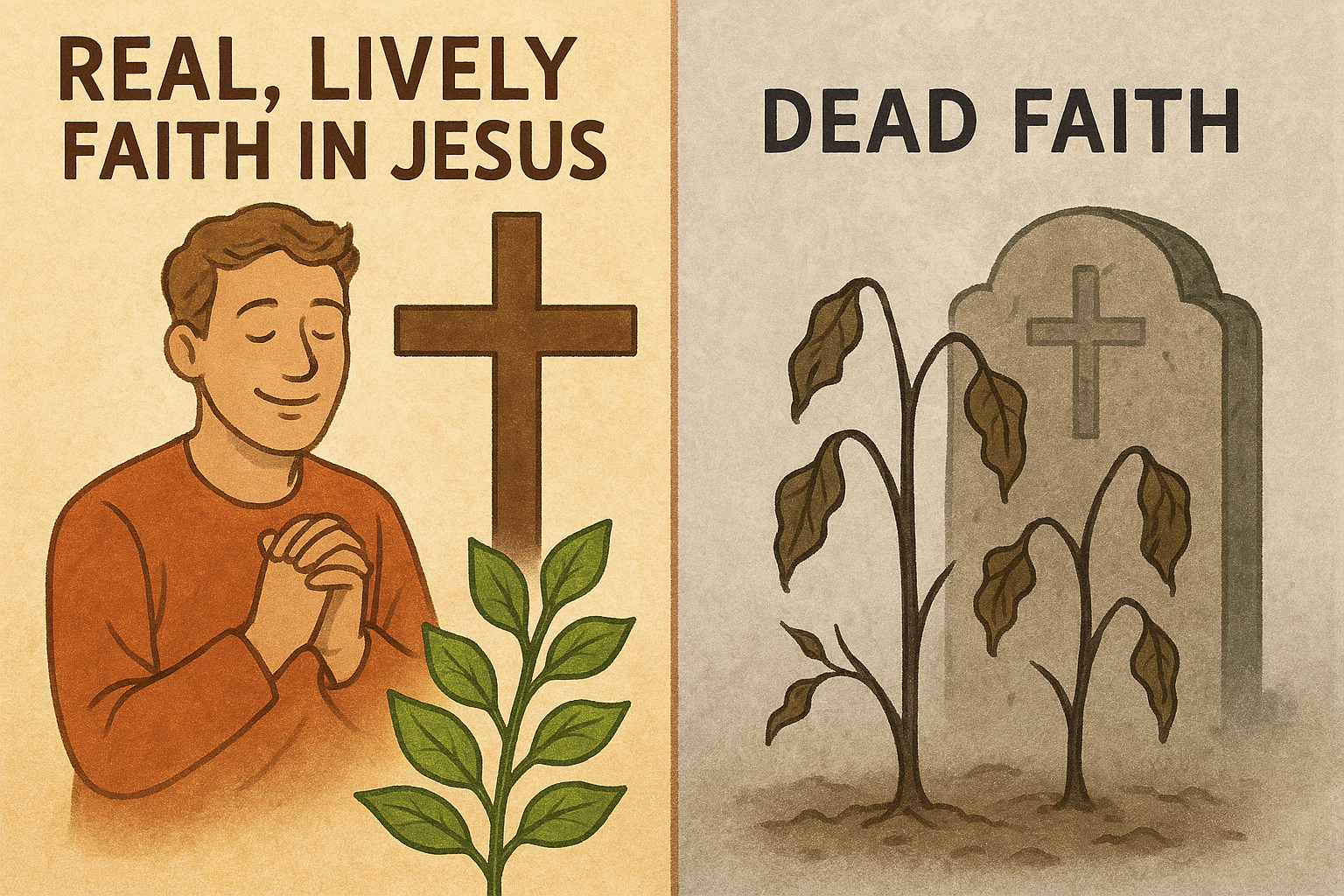
The fourth sermon in the First Book of Homilies focusses on what is referred to as a “lively” faith. Faith that is a living, growing, life-changing trust in Jesus in contrast to a dead, shrivelled, intellectual, mere assent that makes no impact in one’s life.
This sermon is the natural follow on to the previous sermon on Justification by faith Alone and starts by contrasting two kinds of “faith”.
The Faith of Devils
“There is one kind of faith, which in scripture is called a dead faith. This brings forth no good works, but is idle, barren, and unfruitful. And this faith, by the holy apostle St James, is compared to the faith of devils, who believe God to be true and just, and tremble for fear, yet they do nothing well, but all evil (James 2:17-18). This is the kind of faith which wicked and disobedient Christian people have who “confess God” (as St Paul says) with their mouth, “but deny him in their deeds, being detestable, and without the right faith, and unfit for any good work” (Titus 1:16). And this faith is a persuasion and belief in someone’s heart, by which they know that there is a God, and assent to all the truth of God’s most holy word contained in the holy scripture. But it consists only in believing that the word of God is true…so, a person may believe that everything that is spoken about God in the Bible is true, and yet live such an ungodly life that they cannot hope to enjoy the promises and benefits of God…This dead faith therefore is not the sure and substantial faith which saves sinners.”
The Faith that Saves
“There is another kind of faith spoken of in scripture, which is not (like the previous sort of faith) idle, unfruitful, and dead, but works through love, as St Paul declares (Galatians 5:6). As the other, vain faith is called a dead faith, so may this be called a living or lively faith. And this is not only the common belief in the articles of our faith, but it is also a sure trust and confidence in the mercy of God through our Lord Jesus Christ, and a steadfast hope of all good things to be received from God’s hand…And this faith is not without hope and trust in God, nor without the love of God and of our neighbours, nor without the fear of God, nor without the desire to hear God’s word, and to follow it in renouncing evil, and gladly doing all good works.”
The Evidence of True Faith
“For the first, just as light cannot be hidden, but will show itself at one place or other, so a true faith cannot be kept secret. When occasion is offered, it will break out, and show itself by good works.”
In contrast to a true faith,
“If they then fantasise that they are set at liberty from doing all good works, and may live as they lust, they trifle with God and deceive themselves. And it is a manifest token that they are far from having a true and living faith, and also far from knowledge of what true faith means.”
The sermon then refers to the “heroes” of the faith of Hebrews chapter 11 and how their faith led to action and conviction.
“All these Fathers, Martyrs, and other holy people whom St Paul spoke of had their faith surely fixed on God, when all the world was against them. They did not only know God to be the Lord, maker, and governor of all people in the world, but they also had a special confidence and trust that he was and would be their God, their comforter, aid, helper, maintainer, and defender. This is the Christian faith which these holy people had, and we also ought to have.”
A Call to Self-Examination
Towards the end of the sermon there is a call to critical self-evaluation:
“All holy scripture agrees and bears witness that a true, lively faith in Christ brings forth good works. And therefore everyone must examine and test themselves diligently, to know whether they have the same true, lively faith in their heart sincerely, or not—which they shall know by the fruits of it. Many who have professed the faith of Christ have made this error: that they thought they knew God, and believed in him, when in their life they declared the contrary.”
The sermon commends the congregation to a lively, living confidence in the Lord Jesus Christ, not a mere intellectual affirmation of the truth of the Bible.
It is a sermon that is needed in many of our churches today.
*
All extracts are taken from: Gatiss, Lee. The First Book of Homilies: The Church of England’s Official Sermons in Modern English. Lost Coin Press for Church Society. Kindle Edition.
Any comments or queries can be sent to andre@christchurchtygerberg.org.za